Saturday, December 26, 2009
Chopper Stopper: The End Of An Era
I have come to bury Chopper 4, not to praise it.
With apologies to William Shakespeare, that isn’t completely accurate. In my own way, I have come to praise it.
Chopper 4 – the real Chopper 4 – will shoot its final shooting, and chase its final chase, before the first of the year. In its place, will be… Chopper 4, though in name only. In reality, the new Chopper 4 will be a shared venture with WPLG Channel 10. Think of what it would be like if Fox’s Bill O’Reilly and MSNBC’s Keith Olbermann shared a studio, and their pictures turned up on their rival’s network. It would be a tough pill to swallow, especially for the hard-working news gatherers behind the scenes. They’ll say the right things when asked about it, but for my old friends at CBS4, it’s going to be uncomfortable. Count on it.
For those that don’t know, the current CBS4 in Miami – WFOR – was our beloved WCIX Channel 6, until September 10, 1995. It was on that date that WCIX and WTVJ swapped signals (and places on the dial), and WCIX officially ceased to exist. In our hearts, many of us were still CIX’ers, but in time we grew used to being WFOR… and Channel 4. And with the signal swap came a sh!t-load of new promotion, new branding, and a new attitude. Our newscast was now known as News 4 South Florida, and we made sure our viewers knew it. But it wasn’t just the anchors and specialty reporters that were being promoted.
Chopper 4 was the station’s pride and joy. It was promo’d on-air even more than anchors Anne Roberts and Khambrel Marshall. Our news team could compete like never before, not having to worry about the travel time from Doral to, say, Wilton Manors, whenever news would break. We had the best pictures many nights, and the promos that would follow would be the proof of performance. As a producer, I loved it.
But there was a flipside to all of this. Having the technology meant going live for live’s sake, more times than not. I remember having an argument with my news director on a stormy Monday afternoon in 1995. Our chopper crew was insisting that the weather made it too risky to continue flying, but my boss insisted that they stay in the air… just a few minutes more… to provide live pictures for a tease leading up to our 5PM newscast. Chopper 4 was over the scene of a warehouse fire – an ABANDONED warehouse fire. In other words, it was a “who cares” story that affected absolutely no one. Oh, but there were flames! So I had the chopper crew insisting that they couldn’t stay up one minute longer, and my boss in my other ear ordering me to order them to remain in the air. My boss got his way. Fortunately the crew landed safely after going live that day, but that was a hell of a lot of risk for a lousy warehouse fire.
And then there was the ValuJet crash on May 11, 1996. News crews were kept far away from the scene, but Chopper 4’s lens had the power to let us see what rescue crews were doing, in the remotest area of the Everglades. We were the only ones to show body parts being fished out of the muck. Exclusive!!! Only on News 4!!! Afterwards, the brain trust was ecstatic about our coverage, and the pictures that no one else had. Every live shot pertaining to the ValuJet crash had to reference our chopper and its “awesome gyrocam”. I had one viewer scold me for making the chopper the subject of our stories, not the dazed and shell-shocked loved ones of 110 crash victims. She may have been exaggerating, but she also had a point. Chopper 4 helped us tell the story of doomed Flight 592, but it also showed what can happen when promotion is carried too far. The on-air atta-boys were just too much. Sorry, but the public isn’t that stupid.
By now I’m probably sounding like a bitter old ex-newsman, and I don’t mean to. As I said, I have come to praise Chopper 4. When I left my job at WFOR, I had a final request: a ride in Chopper 4. Tom Zack arranged it, and I have to say I had a wonderful time seeing Miami from the sky. It truly was an amazing flying machine, and I hate to use the word was. It’s a cliché, but it’s the truth: All good things must come to an end.
Come the new year, you will continue to hear references to Chopper 4, but the fact remains it’s really Sky 10, repainted sans logo. Staffers have been told to view WPLG as a partner, not a competitor, when it comes to sharing aerials. Yeah, right. I can just see it now.
CBS4’s David Sutta put it best in a recent blog post. Sutta wrote “I’m not fond of the idea that our ‘competitors’ are no longer competitors when we dispatch them to our stories. I feel like I just ‘friended’ the competition on Facebook! We are now ensuring two stations will be covering the same story every day.”
And yet, it could be worse. Poor WTVJ Channel 6 doesn’t even have a chopper at their disposal! It’s like trying to conduct a symphony without a string section. You can still make music, but the sounds aren’t pretty enough to keep most people listening again and again. I go back to the days when we didn’t have choppers or computers, and very few fancy bells and whistles, yet we still managed to put on a newscast. It can be done. But this isn’t 1980 anymore. People have choices. The old ideas just won’t fly anymore, and unfortunately, neither will the real Chopper 4.


Monday, November 23, 2009
J.D.'s Power

He looks so confident, reporting for Fox News, with the world watching and listening to his every word. But that’s not the John Roberts that I knew. In fact, the guy I used to work with at WCIX wasn’t “John Roberts” at all. He was J.D. Roberts, formerly of Canada’s version of MTV. When CBS brought him in to anchor the news in Miami in April 1989, he was in a position of having to prove himself. Of having to show that the once long-haired Rick Springfield look-a-like could write, deliver, and understand hard news. It would not be easy.
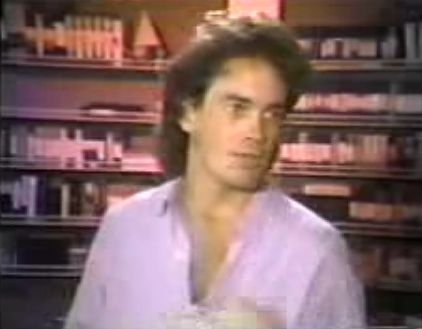
(J.D. Roberts, rock 'n roller, in a video from 1987)
Critics liked to point out his youthful appearance. One even stated that Barbara Sloan looked more like his mother than his co-anchor, a statement that was both cruel and unfair. CBS had high hopes for the new hire, who was promoted incessantly on-air in a way that his predecessor, Jim Dyer, never was. It was clear this was a new age, and behind the scenes there was some kind of master plan for the young, upstart anchor. He just needed to get some experience, and learn what it takes to convince the public that behind the looks was someone who could be trusted to deliver important information. To deliver the truth. And to deliver good Arbitron numbers, of course.
Roberts had two huge things going for him: he both looked and sounded good. There were times he’d slip into Canada-speak, a la Peter Jennings. (It was Roberts’ misfortune that a turret explosion onboard the Navy battleship U.S.S. Iowa happened right after his arrival. His pronunciation – “Iowaww” – would have surely gained the approval of SCTV’s fictitious Canadian Corner hosts Bob and Doug McKenzie.) But if Jennings could say “shed-jule” instead of “schedule” and the public didn’t care, why should we humble 6’ers mind? Take off, eh.
We found out immediately that Roberts was smart, and not afraid to work. He was also a very fast learner. Hey, maybe this is going to pay off, after all! Unfortunately, he and his wife fell into a trap that awaits many newbies in Miami. The couple bought a house in Southwest Miami-Dade County, either in or very close to Richmond Heights. It was an area that looked real good, especially for the money, from the route that the realtor chose to take. What the couple didn’t see were the pockets of poverty very close to that enticing neighborhood. They did not see the blight and the street crime that most would feel was way too close for comfort. After falling victim to Miami’s mean streets, Roberts’ wife quickly soured on South Florida, putting a strain on the couple’s marriage. By the end of 1989, Roberts was seeing another woman – a Channel 6 employee – and the pair emerged from the shadows for that year’s Emmy Awards ceremony. To say it was a tough time in the young anchorman’s life would be putting it mildly.
I don’t remember the exact circumstances, but I have a vague recollection of Roberts having to visit the emergency room of a local hospital, while we were working on the news series Heart Disease: Beating The Odds (which also featured reports by Healthwatch reporter Dr. Steve Greenberg). At one point I had the choice of postponing some interviews for the series, or going out and doing them myself – which is what I wound up doing (considering our time constraints). Roberts felt bad that his involvement in the series was less than what he had hoped. After the final installment of the series aired on Channel 6 Action News, Roberts read his on-camera tag, without thanking his hard-working producer (me), which was standard operating procedure at the conclusion of a news series. He later realized the oversight, and wrote me a note, which I’m about to share. It was a classy gesture. I let him know that I wasn’t angry. I got all the thanks I needed when the series won a Suncoast Regional Emmy Award, one year later, in December 1990.

A personal note from John "J.D." Roberts. Click image to view it full size.

Emmy award for the news series "Heart Disease: Beating The Odds". Roberts was not there to collect his award, having left the station a few months earlier. Click image to view it full size.

J.D. announces that he's leaving. Click image to view it full size.
Having reconciled with his wife, and understanding her concerns, J.D. Roberts put in his notice in July 1990. By September he was back in Toronto, and it seemed the network’s master plan had been foiled – or had it? After anchoring CTV’s morning newscast for a couple of years, it was off to CBS’ crown jewel – WCBS – and then on to the network’s evening newscast, serving as a medical reporter, chief White House correspondent, and—it was believed—the heir apparent to Dan Rather. OK, so that never happened, but Roberts was the back-up anchor of choice for several years, heading up the network’s coverage of Hurricane Katrina, the death of Pope John Paul II, and many other historic moments. Interviews with three presidents and live reports from all over the globe highlighted his time with the network. He’d come a long way from our little series about heart attacks that had caused so much trepidation nearly two decades earlier.
Roberts exited CBS, and joined CNN in February 2006, before finally landing at Fox News in 2011 as the network's senior national correspondent. Anyone with even the slightest knowledge of network news knows the name John Roberts. But for those of us who lived and worked in Miami, there will always be a soft spot for the guy we came to know as J.D. I’ll always remember his reports from Hurricane Hugo, especially the “here I am blowing in the wind” shot that must have aired 100 or more times. Roberts is a bona fide Channel 6 success story, and I’d like to think that the experience and knowledge he gained while working in Miami has played a role in that success. If I helped him get there, even a little, then the hard work was definitely worth it.
November 1989: Roberts introduces a segment from our town hall meeting, “Abortion: The Bitter Controversy”, live from the auditorium at FIU. Click the button to play.
Thursday, September 24, 2009
Lucky 7
Life is a progress, and not a station.– Ralph Waldo Emerson
If you want to make enemies, try to change something.– Woodrow Wilson
Things were so simple before the big Miami TV switcheroo of January 1989. We (WCIX Channel 6) were an independent station, with a low-rated 10PM newscast. Channel 4 (WTVJ) had been a CBS affiliate for four decades. Channel 10 (WPLG) was ABC’s South Florida home, and ditto for Channel 7 (WSVN) and NBC.
But then NBC rocked the boat by buying WTVJ Channel 4, the long-time CBS affiliate. Everyone just assumed CBS would turn around and buy Channel 7, since it was losing its NBC programming. But NO! WSVN owner Ed Ansin played hardball with the big boys, potentially leaving CBS without a home in South Florida… unless it bit the bullet and bought our low-rated, signal-challenged station. (See more on that HERE.) With the sale becoming official, WSVN looked like it was the big loser, destined to scramble for cheap, crappy programming, and destined to sink into the depths of South Florida ratings hell. At least that’s what conventional wisdom would have had us believe.
No one ever told Ed Ansin, GM Bob Leider, and news director Joel Cheatwood about conventional wisdom! While the rest of us thought Channel 7 was about to bury itself, the boys in North Bay Village were dreaming and scheming, thinking so outside-the-box that the box practically burst. If WSVN had to become an independent station… well, why can’t it be the number one indie station in the country? So promised GM Leider, as you’ll see in the following video clips from 1988. Damn if he wasn’t right.
This was before Penny Daniels and Sally Fitz had become hyperbolic; before Rick Sanchez became a lead anchor; when folks such as Bud Fraga and Marianne Murciano still did news the old-fashioned way. This was before Channel 7’s Inside Story further blurred the lines between journalism, infotainment, and tabloid trash. You will hear Carmel Cafiero say “I will miss NBC”, but that sentiment would not be echoed by the station’s brain trust. Their creative, inventive, provocative, compelling, sleazy, salacious approach to news not only changed WSVN forever, but this market as well. This ain’t the 80s anymore. Roll over Wayne Fariss, and tell Richard Whitcomb the news!
(Also see our previous entry about WSVN here.)
Tuesday, September 15, 2009
You Better Not Shout...
“YOU LIE!”
Congressman Joe Wilson’s shout heard round the world has made him either a hero or a villain, depending on your view of President Obama and his health care reform bill. To me, there was something unsettling about those words. About an hour after his outburst, I found myself repeating those two words, but changing the inflection, making them sound angrier… scarier… OMINOUS (to use a Neil Goldstein term). I had no clue why I did that… at the time. But now I know. It turns out Wilson was not the only person to shout those words (or words that are very similar) at someone who had the floor during an official proceeding.
It happened in Miami… in a courtroom… in 1985. An angry man listened as his young bride accused him of sexually molesting a 5-year-old boy. With rage building and his patience dwindling, the man stood up and screamed “Liar! YOU ARE A LIAR!” In the words of the Gainesville Sun, his wife “shrieked and shirked back into her chair, her mouth twisted in pain, as if she had been shot”. She then told the prosecutor, “get me out of here”, as a stunned jury watched. That man’s name is Francisco “Frank” Fuster Escalona, operator of the infamous Country Walk Babysitting Service, and the center of Florida’s most famous child abuse case. That outburst painted Fuster as some kind of a monster in the eyes of the jury, and most assuredly played a role in his ultimate conviction.
I’ve written before about how former WCIX news director Larry Lyle squelched our initial investigation into Fuster and the Country Walk case, barring it from the air until Channel 10 finally broke “our” story. That’s not the only reason I still have such an interest in the Fuster case. I met the man. It capped one of the most bizarre days in my career at Channel 6.
I was working on an investigation into yet another child abuse case, with anchor/reporter Giselle Fernandez. Our investigation, titled “Devil In Our Church?”, would lead us to several unsavory places, and include interviews with some rather unsavory people. On February 1, 1990, it led us to Florida State Prison in the town of Starke, which had been Frank Fuster’s home since his conviction.
Giselle, Rafael “Ralph” Murciano, and I boarded a plane for Gainesville that morning. We didn’t know it at the time, but rock ‘n roll legend Bo Diddley was also on board that plane. As we headed for the gate, Murciano noticed Diddley, and called out his name. In the chaos, I bumped into the singer-guitarist. Literally! Diddley noticed the TV camera, and pulled out an 8 X 10 photo, which he promptly autographed (with Murciano capturing the moment). He also wrote his phone number on the back, in the hope that we’d be interested in an interview. Well, of course!

(Autographed by Bo Diddley at the Gainesville Airport. Click the image to view it full size.)
We had a little time before our appointment at the prison, so we had breakfast in Waldo, Florida, and checked out a thrift store or two. We noticed a yard sale going on near the prison, so we stopped there too -- just long enough for Giselle to buy a pulp paperback for 10 cents. Its name? Ravaged. Giselle thought it would be fun to read us some of the steamier passages from the book, using her best breathy, orgasmic voice. This went on while driving, while waiting at the prison, and even on the plane ride home. She had us in stitches!
To me, Giselle Fernandez was a blast to work with. Some people at the station disliked her, because she could get bossy, downright ornery, and could be a real prima donna. Those are just three reasons why I thought she was great! Do you think it was easy being a strong female journalist, two decades ago? Giselle knew what she wanted, and was always determined to get it. The two of us made an amazing team.
Finally, it was show time at Starke. Giselle put Ravaged away, and we were led to a special area. There we met the “monster". He did not have horns or a long tail. He was just a man. Model prisoner Fuster was now using the surname Escalona, further distancing himself from his infamy. For hours, he professed his innocence, outlining every hole in the case that it was humanly possible to find. He was SO convincing that Giselle promised to research his claims, and possibly help him, should she find that his story checked out. I do not know if Fuster did the things that Janet Reno’s office, his own son, and several kids in his care accused him of doing. I do know from personal experience how convincing child molesters can be. I was a victim of sexual abuse when I was a young teen, and no one believed me at the time. After all, the hospital worker that attacked me was “such a sweet man who would never do anything like that”. I’m still surprised I was able to carry on a rational conversation with Fuster, and even shake his hand. Guess it was just the journalist in me, trying to do my objective best.
With Janet Reno constantly in the news throughout the 90s, it was only natural for the media to investigate one of her Miami office’s biggest victories. Even Frontline joined the “was Fuster railroaded” fray. Giselle Fernandez made some calls, and corresponded a few times with Fuster, but decided not to pursue his claims. His interview was not used in “Devil In Our Church?”, but instead aired separately, as an Action News update. Several hours of interviews were condensed into a two-minute piece that concentrated on the parts that made Fuster look scary and threatening. Yes, it was Fuster’s fault for uttering scary and threatening remarks, when he knew the cameras were rolling. It would have been irresponsible for us NOT to include that part of the interview, but it may have also been irresponsible for us to make that the focus of the piece. It made for compelling TV, which in that consultant-driven environment, really was the name of the game.
I was rarely paired with Giselle Fernandez during her final year at the station. We were just too strong together. I often was paired with unmotivated anchors or reporters, who needed a push to get the maximum out of our assigned news series. The Jeff and Giselle team did not like to take no for an answer, and could sometimes get insubordinate. Managers don’t like that. We would put a story together, and then tell our bosses that we did so. It would have driven me up a wall, too, had I been a manager. But the thing is – our stories kicked butt. The topics were compelling, and Giselle’s on-camera style always made for great TV. I never enjoyed working with anybody as much as I liked working with Giselle. I even watched her on “Dancing with the Stars”, even though I despise that boring waste-of-time TV show.

(Click the image to view it full size)
When Giselle left Channel 6 in September 1991, I gave her a special present: a book. A dog-eared pulp paperback. It was Ravaged. I’d kept it.
As for Frank Fuster… well, he still maintains his innocence. You can’t help but wonder if his case might have turned out differently had he not shouted those words in court. The jury saw a scary, imposing figure, when he raised his voice and shouted “YOU ARE A LIAR!" Congressman Joe Wilson will have his jury, too: the voters of South Carolina. His judgment day will arrive soon enough.
Congressman Joe Wilson’s shout heard round the world has made him either a hero or a villain, depending on your view of President Obama and his health care reform bill. To me, there was something unsettling about those words. About an hour after his outburst, I found myself repeating those two words, but changing the inflection, making them sound angrier… scarier… OMINOUS (to use a Neil Goldstein term). I had no clue why I did that… at the time. But now I know. It turns out Wilson was not the only person to shout those words (or words that are very similar) at someone who had the floor during an official proceeding.
It happened in Miami… in a courtroom… in 1985. An angry man listened as his young bride accused him of sexually molesting a 5-year-old boy. With rage building and his patience dwindling, the man stood up and screamed “Liar! YOU ARE A LIAR!” In the words of the Gainesville Sun, his wife “shrieked and shirked back into her chair, her mouth twisted in pain, as if she had been shot”. She then told the prosecutor, “get me out of here”, as a stunned jury watched. That man’s name is Francisco “Frank” Fuster Escalona, operator of the infamous Country Walk Babysitting Service, and the center of Florida’s most famous child abuse case. That outburst painted Fuster as some kind of a monster in the eyes of the jury, and most assuredly played a role in his ultimate conviction.
I’ve written before about how former WCIX news director Larry Lyle squelched our initial investigation into Fuster and the Country Walk case, barring it from the air until Channel 10 finally broke “our” story. That’s not the only reason I still have such an interest in the Fuster case. I met the man. It capped one of the most bizarre days in my career at Channel 6.
I was working on an investigation into yet another child abuse case, with anchor/reporter Giselle Fernandez. Our investigation, titled “Devil In Our Church?”, would lead us to several unsavory places, and include interviews with some rather unsavory people. On February 1, 1990, it led us to Florida State Prison in the town of Starke, which had been Frank Fuster’s home since his conviction.
Giselle, Rafael “Ralph” Murciano, and I boarded a plane for Gainesville that morning. We didn’t know it at the time, but rock ‘n roll legend Bo Diddley was also on board that plane. As we headed for the gate, Murciano noticed Diddley, and called out his name. In the chaos, I bumped into the singer-guitarist. Literally! Diddley noticed the TV camera, and pulled out an 8 X 10 photo, which he promptly autographed (with Murciano capturing the moment). He also wrote his phone number on the back, in the hope that we’d be interested in an interview. Well, of course!

(Autographed by Bo Diddley at the Gainesville Airport. Click the image to view it full size.)
We had a little time before our appointment at the prison, so we had breakfast in Waldo, Florida, and checked out a thrift store or two. We noticed a yard sale going on near the prison, so we stopped there too -- just long enough for Giselle to buy a pulp paperback for 10 cents. Its name? Ravaged. Giselle thought it would be fun to read us some of the steamier passages from the book, using her best breathy, orgasmic voice. This went on while driving, while waiting at the prison, and even on the plane ride home. She had us in stitches!
To me, Giselle Fernandez was a blast to work with. Some people at the station disliked her, because she could get bossy, downright ornery, and could be a real prima donna. Those are just three reasons why I thought she was great! Do you think it was easy being a strong female journalist, two decades ago? Giselle knew what she wanted, and was always determined to get it. The two of us made an amazing team.
Finally, it was show time at Starke. Giselle put Ravaged away, and we were led to a special area. There we met the “monster". He did not have horns or a long tail. He was just a man. Model prisoner Fuster was now using the surname Escalona, further distancing himself from his infamy. For hours, he professed his innocence, outlining every hole in the case that it was humanly possible to find. He was SO convincing that Giselle promised to research his claims, and possibly help him, should she find that his story checked out. I do not know if Fuster did the things that Janet Reno’s office, his own son, and several kids in his care accused him of doing. I do know from personal experience how convincing child molesters can be. I was a victim of sexual abuse when I was a young teen, and no one believed me at the time. After all, the hospital worker that attacked me was “such a sweet man who would never do anything like that”. I’m still surprised I was able to carry on a rational conversation with Fuster, and even shake his hand. Guess it was just the journalist in me, trying to do my objective best.
With Janet Reno constantly in the news throughout the 90s, it was only natural for the media to investigate one of her Miami office’s biggest victories. Even Frontline joined the “was Fuster railroaded” fray. Giselle Fernandez made some calls, and corresponded a few times with Fuster, but decided not to pursue his claims. His interview was not used in “Devil In Our Church?”, but instead aired separately, as an Action News update. Several hours of interviews were condensed into a two-minute piece that concentrated on the parts that made Fuster look scary and threatening. Yes, it was Fuster’s fault for uttering scary and threatening remarks, when he knew the cameras were rolling. It would have been irresponsible for us NOT to include that part of the interview, but it may have also been irresponsible for us to make that the focus of the piece. It made for compelling TV, which in that consultant-driven environment, really was the name of the game.
I was rarely paired with Giselle Fernandez during her final year at the station. We were just too strong together. I often was paired with unmotivated anchors or reporters, who needed a push to get the maximum out of our assigned news series. The Jeff and Giselle team did not like to take no for an answer, and could sometimes get insubordinate. Managers don’t like that. We would put a story together, and then tell our bosses that we did so. It would have driven me up a wall, too, had I been a manager. But the thing is – our stories kicked butt. The topics were compelling, and Giselle’s on-camera style always made for great TV. I never enjoyed working with anybody as much as I liked working with Giselle. I even watched her on “Dancing with the Stars”, even though I despise that boring waste-of-time TV show.

(Click the image to view it full size)
When Giselle left Channel 6 in September 1991, I gave her a special present: a book. A dog-eared pulp paperback. It was Ravaged. I’d kept it.
As for Frank Fuster… well, he still maintains his innocence. You can’t help but wonder if his case might have turned out differently had he not shouted those words in court. The jury saw a scary, imposing figure, when he raised his voice and shouted “YOU ARE A LIAR!" Congressman Joe Wilson will have his jury, too: the voters of South Carolina. His judgment day will arrive soon enough.
Tuesday, August 18, 2009
CBS To The Rescue

We were incredulous. Sure, we’d heard the rumors that big bad CBS was going to buy our low-rated, signal-challenged independent TV station, but get real! They’d backed a winner in WTVJ Channel 4 for the past four decades, but now NBC was buying Channel 4, changing everything. We’d all speculated on what could happen if we were actually taken over by the Columbia Broadcasting System, but few of us really believed it would happen. But it did! The announcement came down on 8-8-88. It may have appeared 8’s were wild that day, but for us, everything was coming up 6’s. The takeover would become official come the new year. The ant that thought he could move a rubber tree plant finally had more than just high hopes, as the new owners planned to spend money, make improvements, and do anything they could to justify their investment. Bring it on, we said. Make us a contender!
Who at Channel 6 wasn’t affected by the change? For some, it was time to move up. For others it meant moving out, as the network boys brought in lots of new blood. For me it meant a move to the new special projects unit, and a chance to produce specials, series, and what have you. Anything besides the newscast grind (although I still had to produce the Saturday and Sunday newscasts.) I had the “pleasure” of producing the first Saturday 6PM show in Channel 6’s history. Unfortunately it followed basketball, and the game ran long, which meant… Channel 6’s first accordion show! That’s when the show has to be sliced, diced, then sliced-and-diced some more (depending on how little time was left between the end of the game and the start of network news at 6:30 sharp). Just one of the fun new things we had to get used to. The change meant more newscasts, expanded coverage, and much higher expectations – all good things, especially when you consider what a busy first month it was: Overtown civil disturbances. Miami’s first Super Bowl in ten years. Ted Bundy’s execution. An influx of Nicaraguan refugees, enough to fill Bobby Maduro Stadium to capacity. The first George Bush’s inauguration. Whew, we were busy. But help was on the way. We had already stolen Al Sunshine away from WTVJ, and soon some shiny new anchors would join the team. By April, J.D. Roberts (now Fox’s John Roberts) was brought in from Canada to anchor the news with Barbara Sloan (sending Jim Dyer to the weekends). Giselle Fernandez joined the team the following month, followed a little while later by John Hambrick, who had been WTVJ’s star anchorman. The new anchors raised the bar even higher, and so did the new management team.
CBS brought in Jay Newman, who presented a blueprint that would be hard to follow – but we sure tried. Newman mandated that anchor tags follow every reporter package. Producers were not allowed to change anchors between stories, without an on-camera tag as a transition. Every block of news had to have a light “ender”, to set the mood before the tease that followed. And all teases had to have at least two pieces of video in them. Lofty goals. By March the station had hired Ron Tindiglia as our consultant, to further refine our newscasts and make more mandates. Some of us called Tindiglia “The Guru”, because of the way he would hold middle management spellbound through the years. Tindiglia’s word was like the word of God around that newsroom. Thou shalt write to video at all times!
That first year under CBS brought rapid changes to our humble newsroom. I spent part of January training our two newest producers, Brian Jones and Zahir Sachedina. I was supposed to be part of the special projects unit, but didn’t get a sniff of a news series until April. Sachedina’s ulcer, and Jones being thrown into an in-depth series about the Overtown disturbances (“A Search For Answers”) kept me tied to the producer’s desk for several extra weeks. During this time I became close friends with one of our new associate producers, Marty Hames. It was then that I learned that when it came to our new owners, there was way more than meets the eye.
Hames, it turns out, wasn’t just an A.P., and she wasn’t hired by our Miami management team like the rest of us writer/producer types. She was personally placed at our station by CBS honcho Eric Ober. By the time she was introduced to us, her ticket to stardom had already been punched. Unbeknownst to us, she was here to learn the ropes of writing, and the ins and outs of news, before being placed in an anchor’s position somewhere in the CBS empire. (There was even talk about renaming her Rosario Velasco, to capitalize on her mother’s Latin heritage.) It turns out there were other secret apprentices. Our new anchor hires were all seen as future stars, and Miami was pretty much just a stop along the way. Hey South Florida, don’t get too used to these folks! The anchor-as-celebrity was already germinating on our airwaves, and the old guard – the Jim Dyers – was being pushed aside. That’s show biz, as they say. And show biz, it was. J.D. Roberts and Giselle Fernandez were terrific anchors and personalities, but I doubt if WCIX ranks high on their resumes. But they would give us the visibility we needed to make the transition from afterthought in the Miami market, to a future player.
Just the way the network planned it.
Subscribe to:
Posts (Atom)